Black Ash (Ab)
Fraxinus nigra Marsh.
Frêne noir
Also known as Swamp Ash or Hoop Ash
Native Range: It is typically found in northern swampy forests ranging from eastern Manitoba to the Atlantic provinces. In Newfoundland, it is the only native ash species and occurs there as a small, uncommon tree.
Leaves:
7-11 leaflets on a central stalk 15 ⇔ 30 centimeters long.
Leaflets 10 ⇔ 14 centimeters long, stalkless pinnate leaf with narrow, lance shaped, finely toothed leaflets arranged in opposite pairs along a central stalk.
Dark green, hairless with exception to dense tufts of reddish brown hairs where the leaflet attaches to the central leaf stalk.
Turns reddish brown in autumn/fall.
Buds:
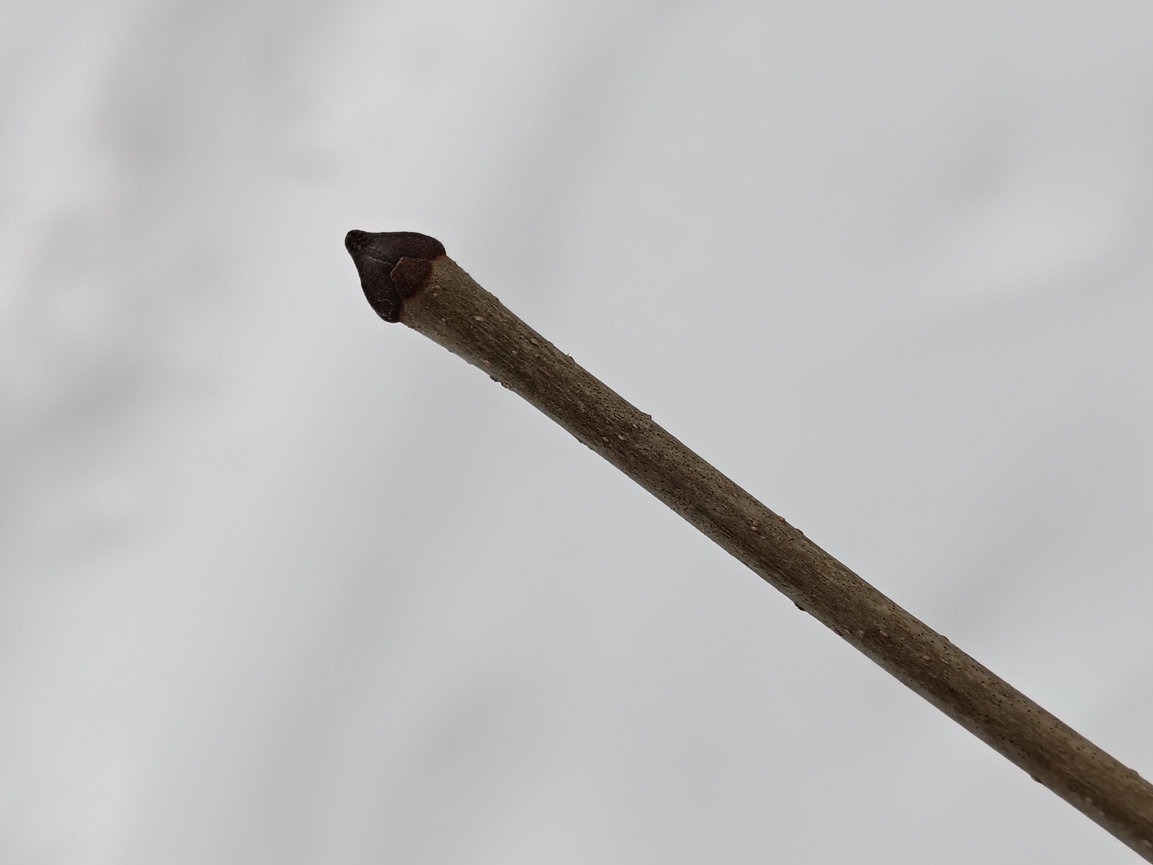
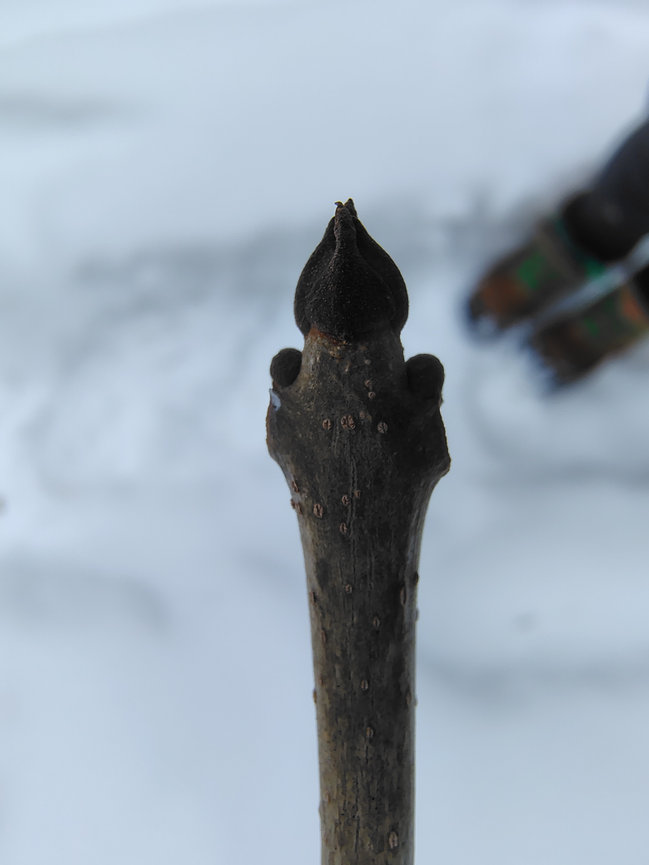
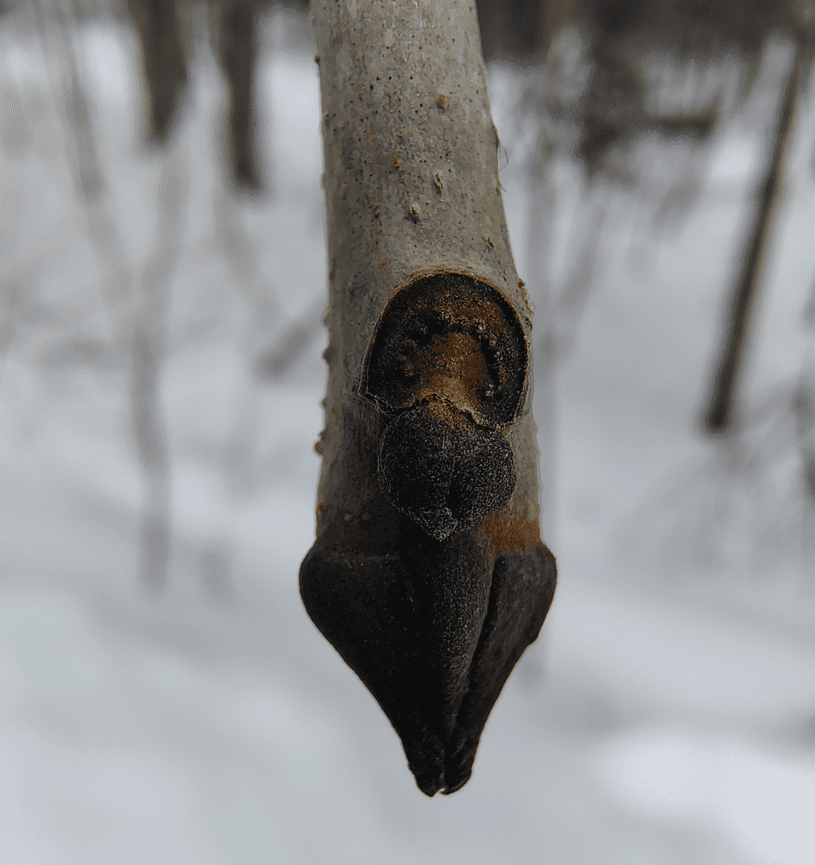
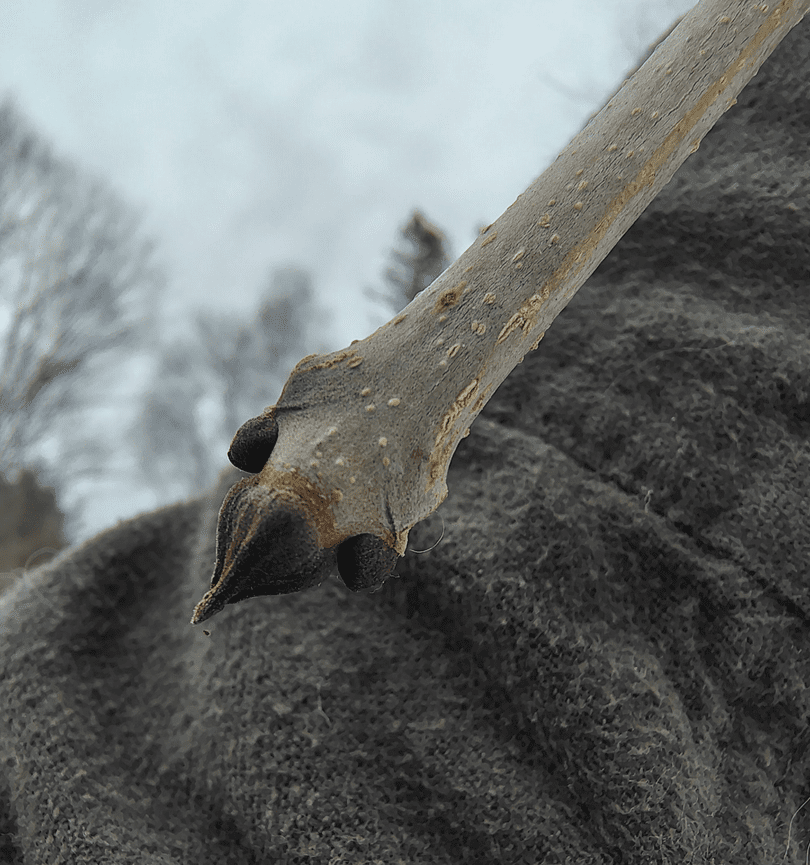
Terminal bud is 0.4 ⇔ 1 centimeters long, wide, pointy, dark brown.
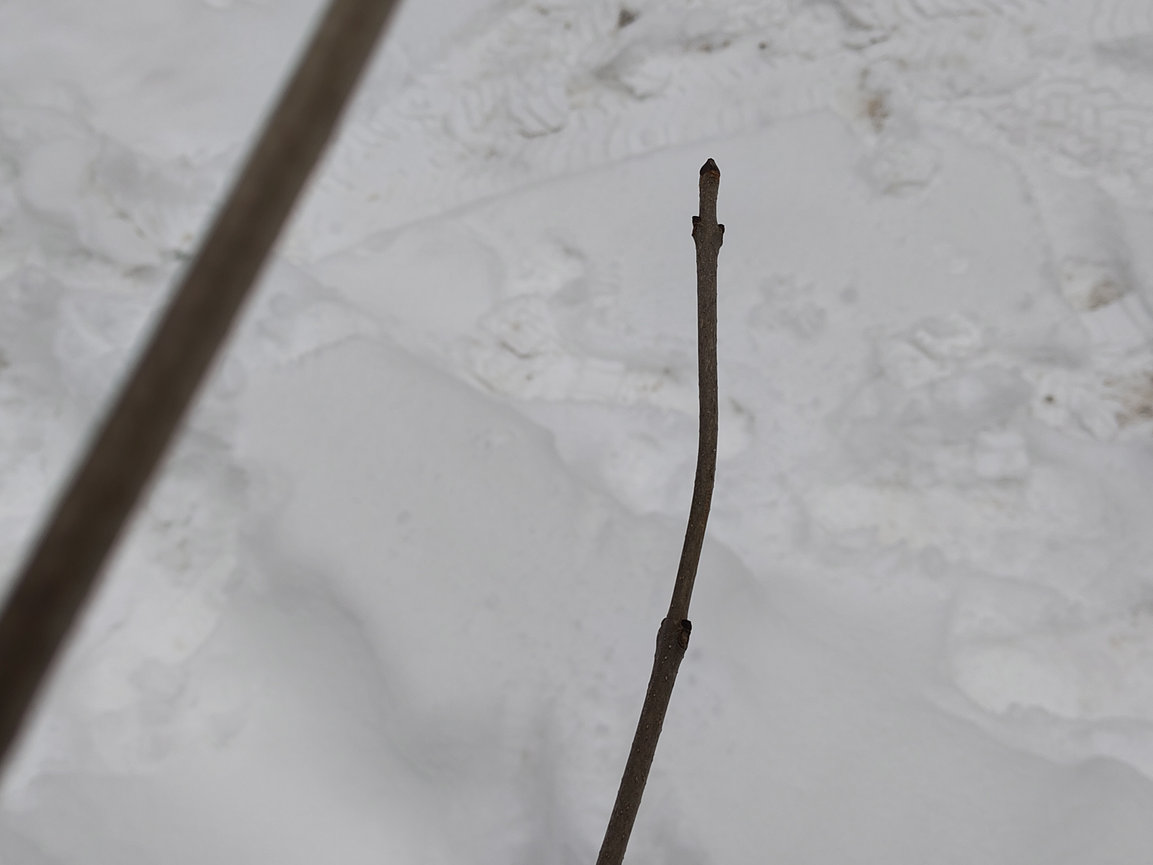
Uppermost pair of lateral buds are set distinctly below the terminal bud, with the bark clearly visible above them.
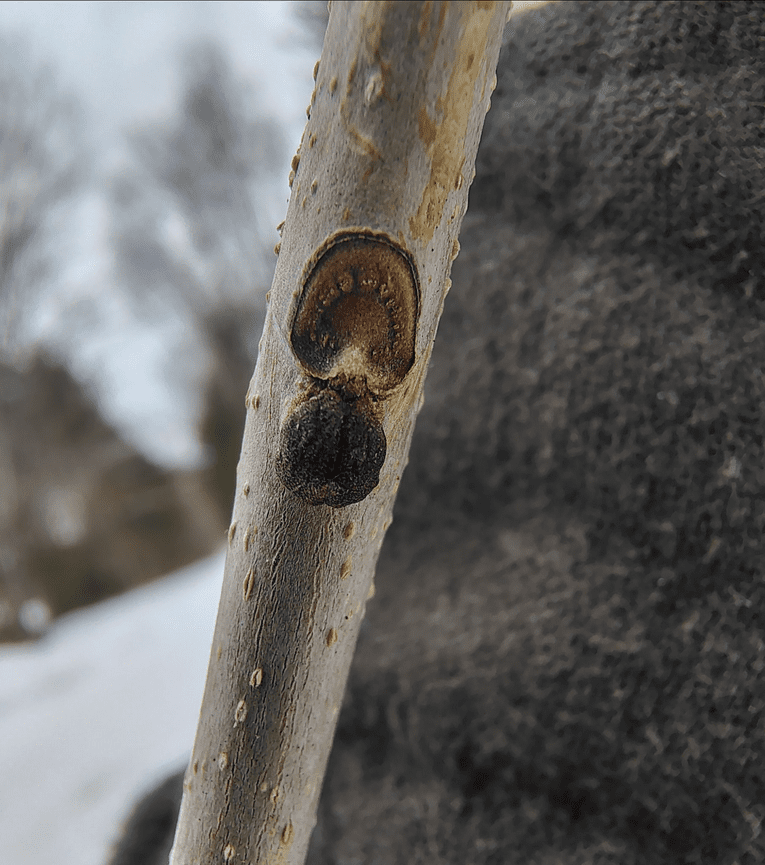
Leaf scars are large and rounded.
Twigs:
Fairly thick, bright green/dark purple, raised lenticels when young becomes dull gray.
Flowers:
The pollen-bearing and seed-bearing structures are typically combined in the same flower. May sometimes occur as separate male and female flowers on different trees. Pollen, seed, and flowers can all be present on a single tree. Flower clusters tend to form more often at the tips of twigs than in other ash species.
Fruits:
2.5 ⇔ 4 centimeters long, with a broad, often twisted wing.
Wing sometimes slightly notched at the tip that lead to the bottom of the compressed seedcase.
Crops occur irregularly, up to 7 years.
Germination after the second season following seedfall.
Bark:
Can be indented with pressure such as fingernail. Light gray, soft corky ridges and fissures that can be easily rubbed off. Becomes scaly with maturity.
Wood:
Straight-grained flexible wood.
Favored for making
Can be bent permanently and separated into thin layers by repeated pounding, which is ideal for basketry.
Size and Form:
20 m high, 50 centimeter diameter average.
Trunk is slender, sometimes bent or leaning.
Crown is narrow and open, with coarse, ascending branches.
Root system is shallow and wide-spreading.
Habitat:
A species of northern boreal and cool temperate wetlands, black ash occurs in forested swamps, riparian corridors, and depressional basins with poorly drained, often mucky soils. It is highly tolerant of prolonged soil saturation and periodic inundation.
Grows in pure stands but usually grows mixed with black spruce, balsam fir, eastern white-cedar, speckled alder, red maple, and silver maple.
Intolerant of shade.
Notes:
The wood is highly valued for its flexibility and is used for making snowshoe frames, barrel hoops, canoe ribs, and woven basketware.
The bark can be used for making thin layers by pounding, which is key in traditional crafts like basket weaving.