American Beech (Be)
Fagus grandifolia Ehrh.
Fagaceae: Beech Family
Hêtre à grandes feuilles
Native to Canada.
Found in moist, well-drained slopes and rich bottomlands.
Often forms part of climax forests with sugar maple, yellow birch, and eastern hemlock.
Form:
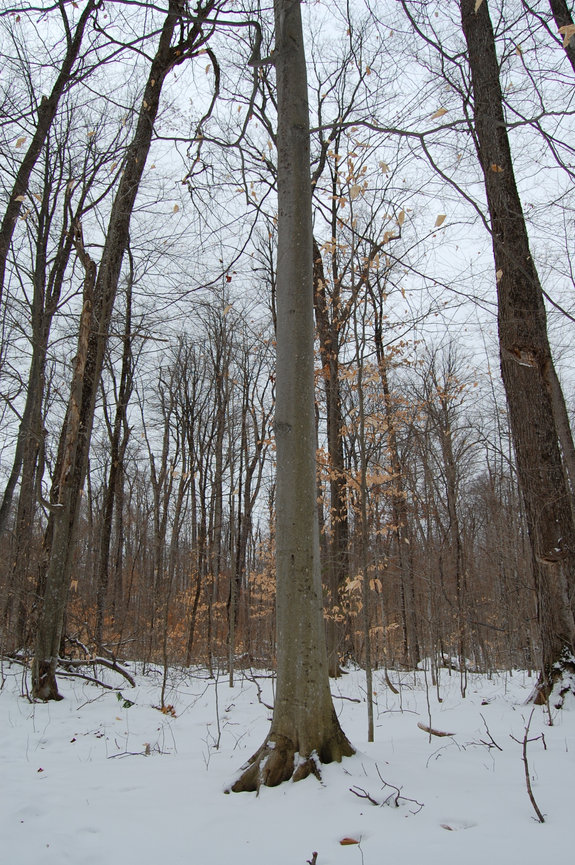
Medium. ~25 m high, 100 cm diameter.
Can live over 200 years.
Root system is wide-spreading.
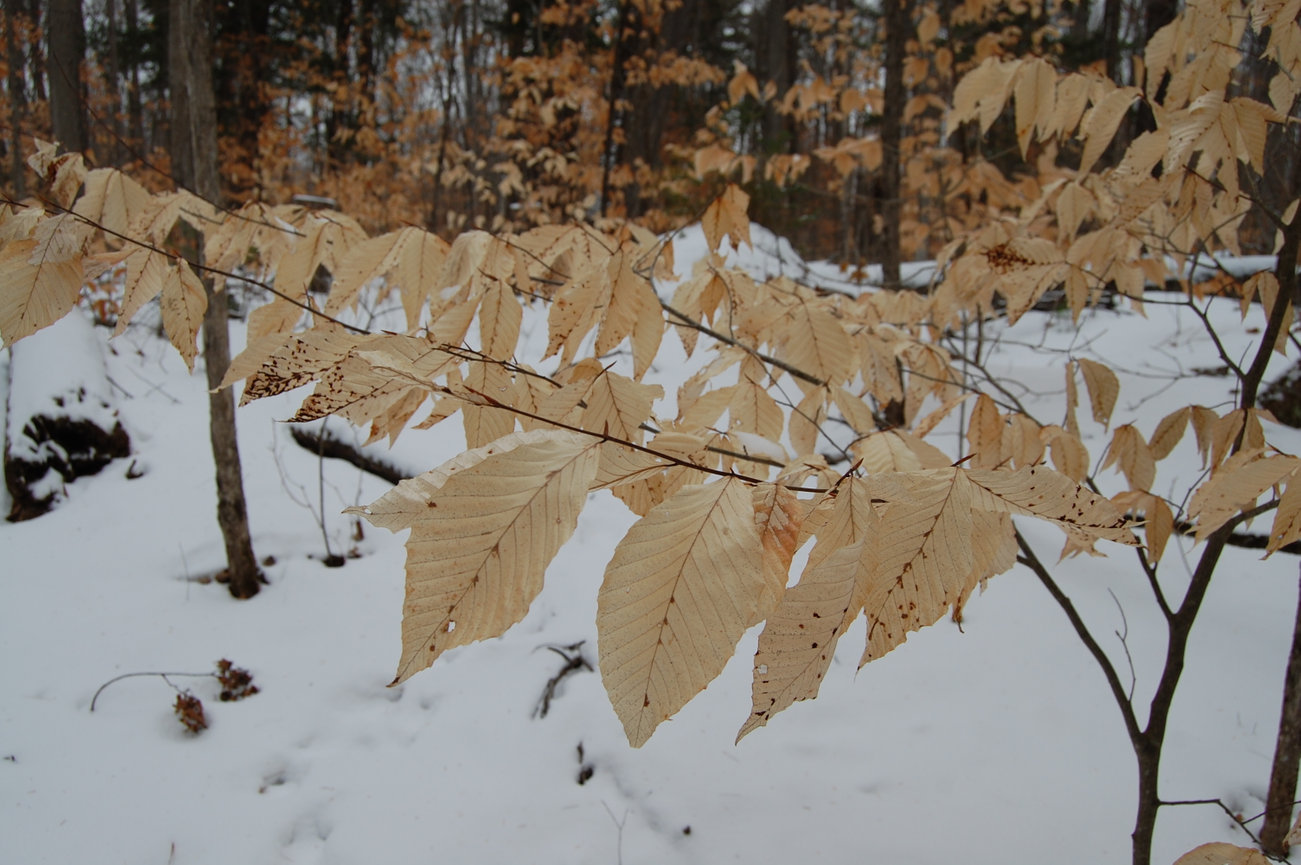
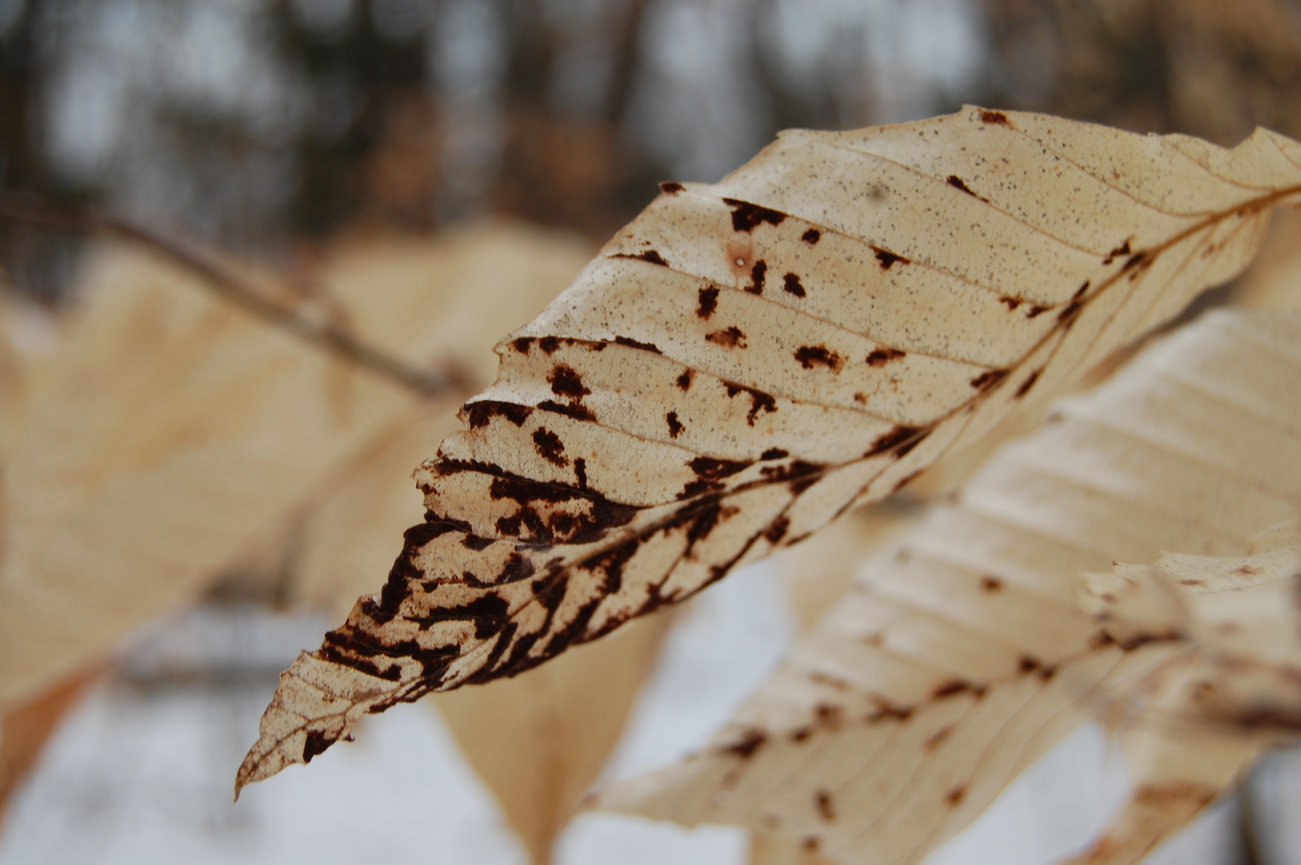
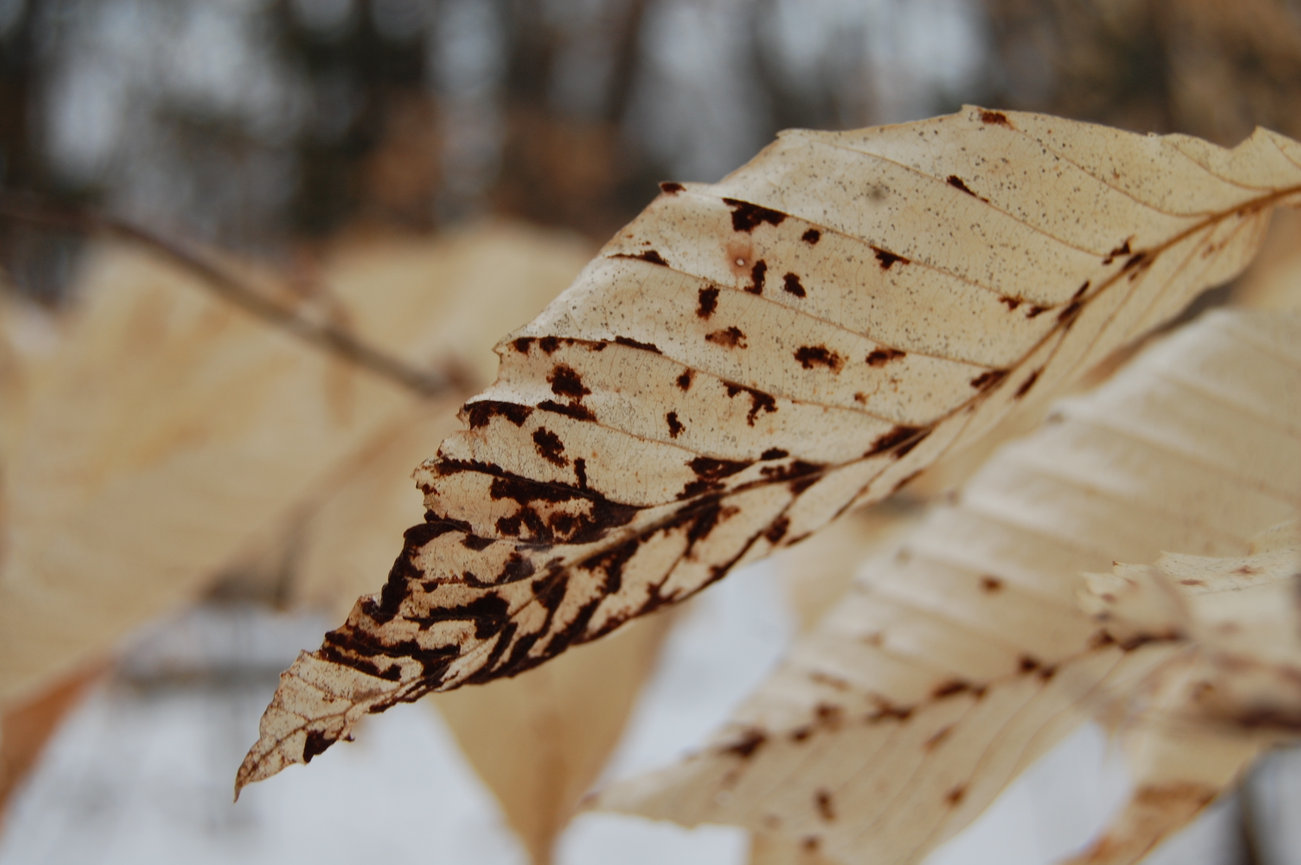
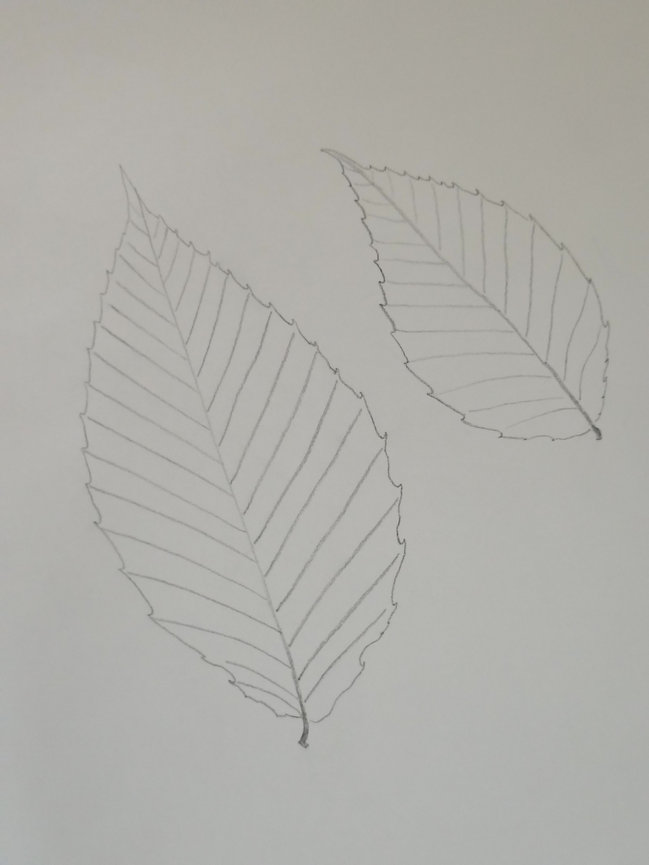
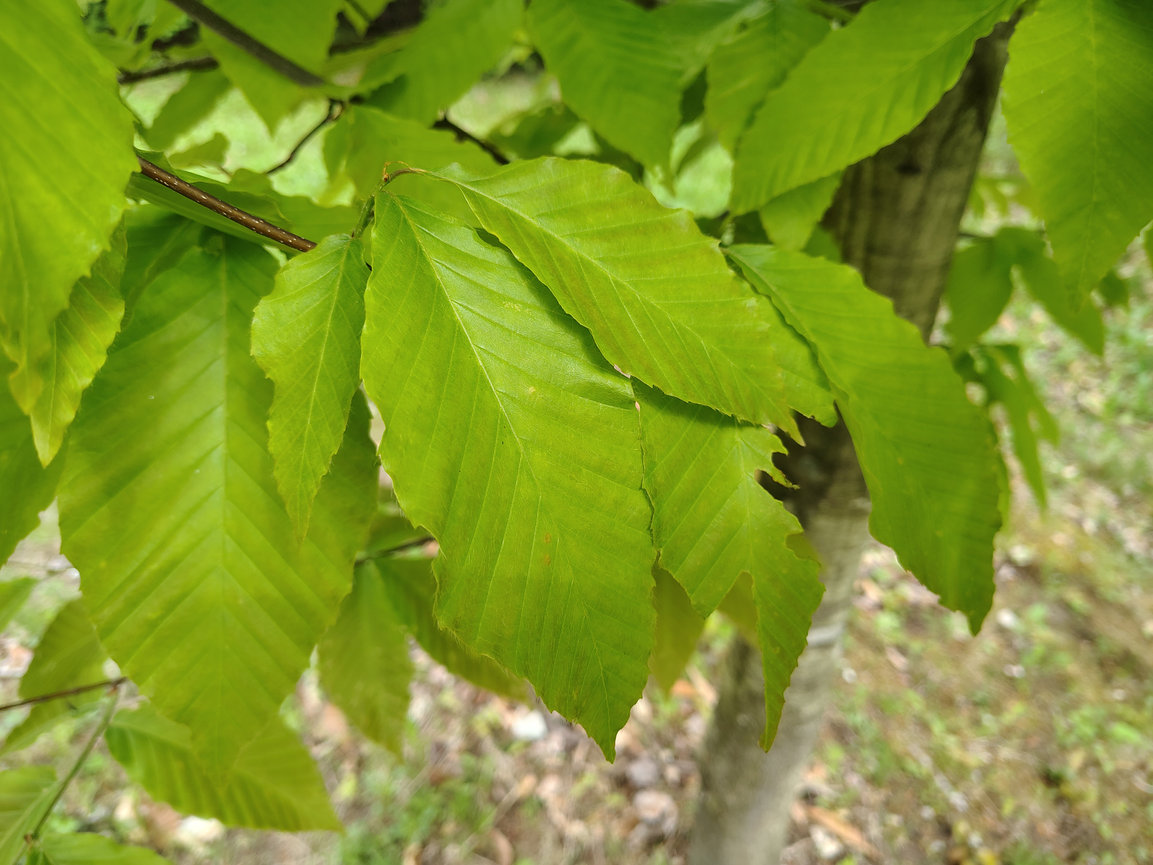
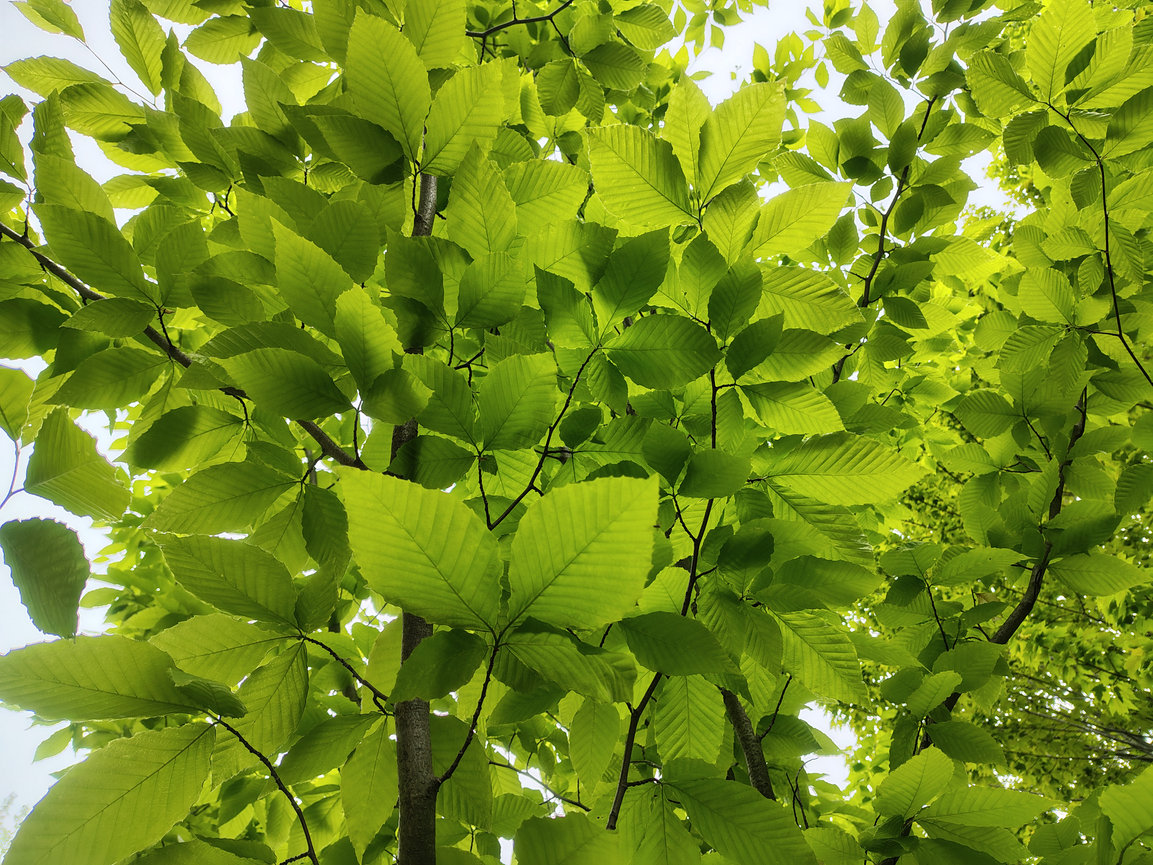
Leaf: Deciduous, alternate, simple, narrowly ovalish. 6 ⇔ 14 centimeters with pointed tip.. Leathery texture. Top is dark bluish green. Lower surface is lighter with 9 ⇔ 14 straight, each vein chunked parallel ending in a tooth.
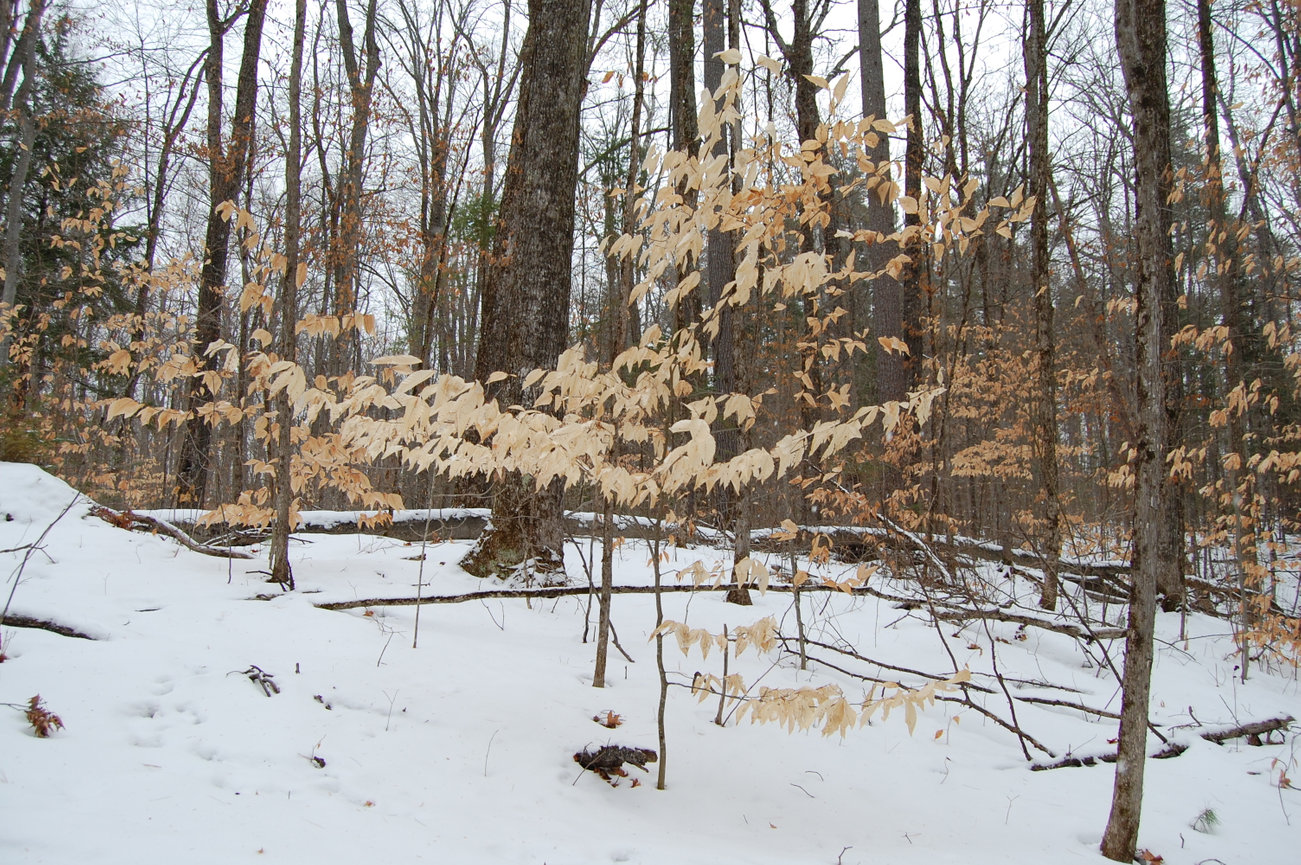
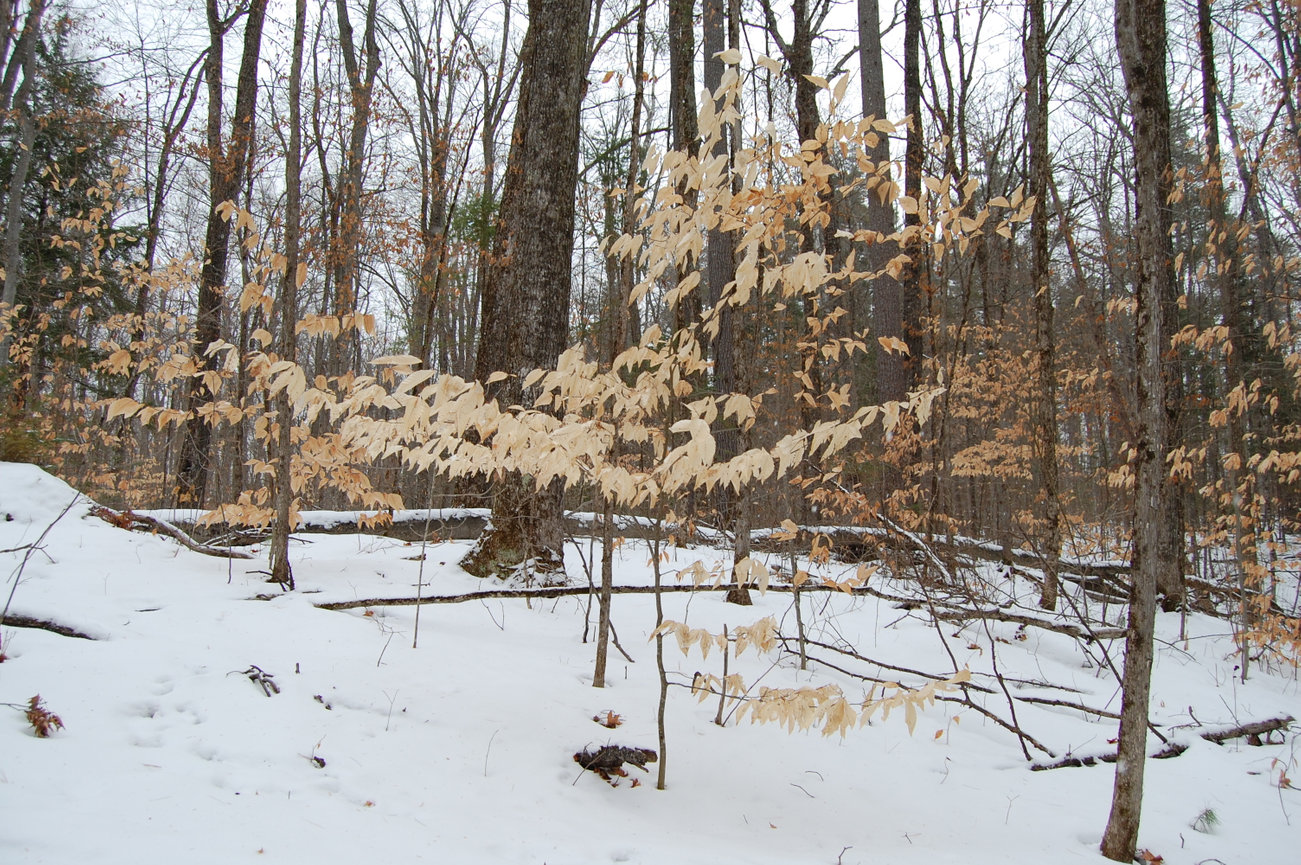
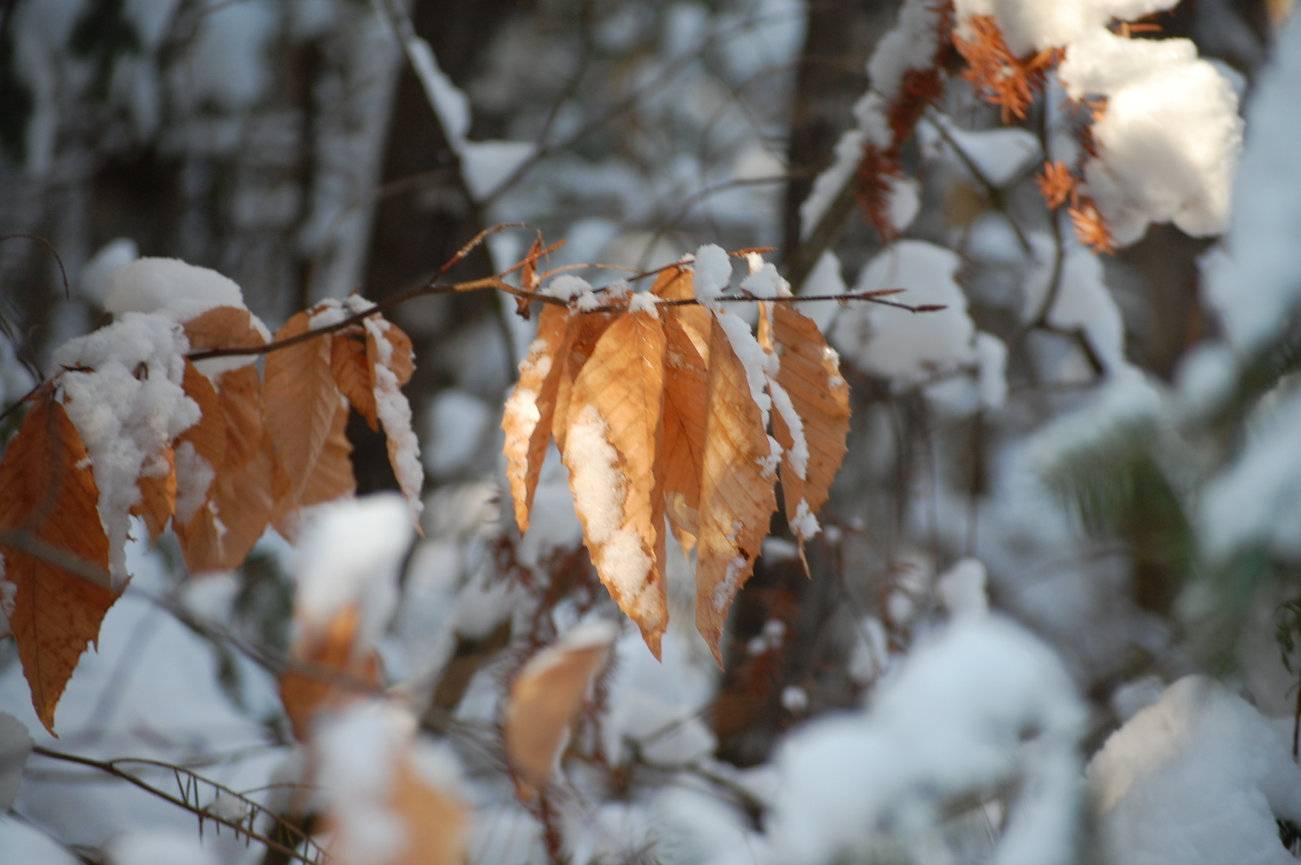
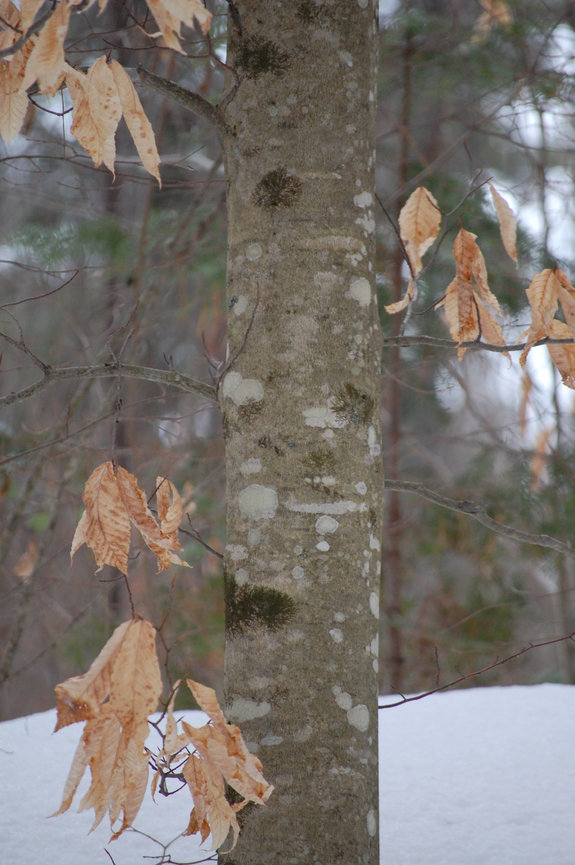
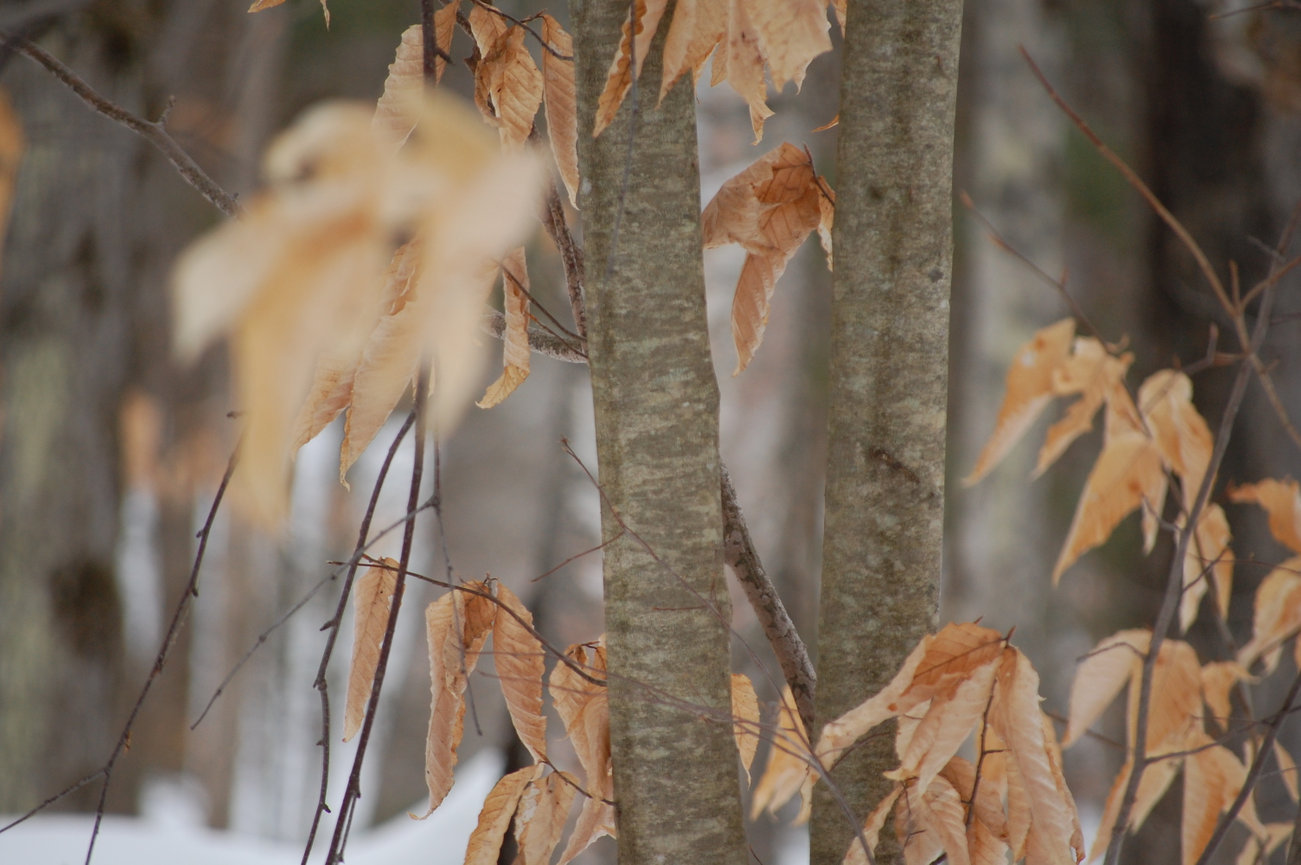
Leaves on young trees and lower branches of large trees often remain through winter, dry and bleached.
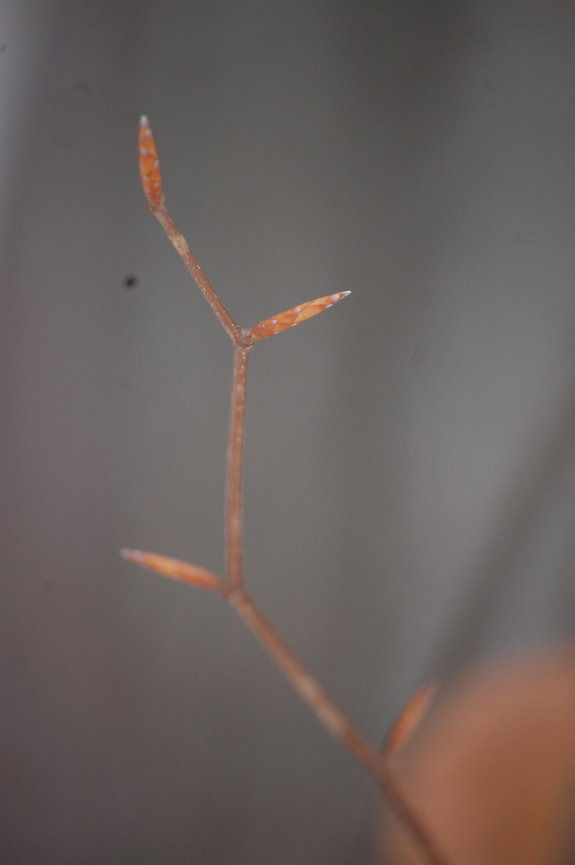
Bud: Terminal bud similar to lateral buds. Extended length, slender, very pointy, tightly coiled. 1.5 2.5 centimeters, brownish grayish tipped scales in 4 rows.
Buds on basal part of twig: very small, inconspicuous, and stalkless.
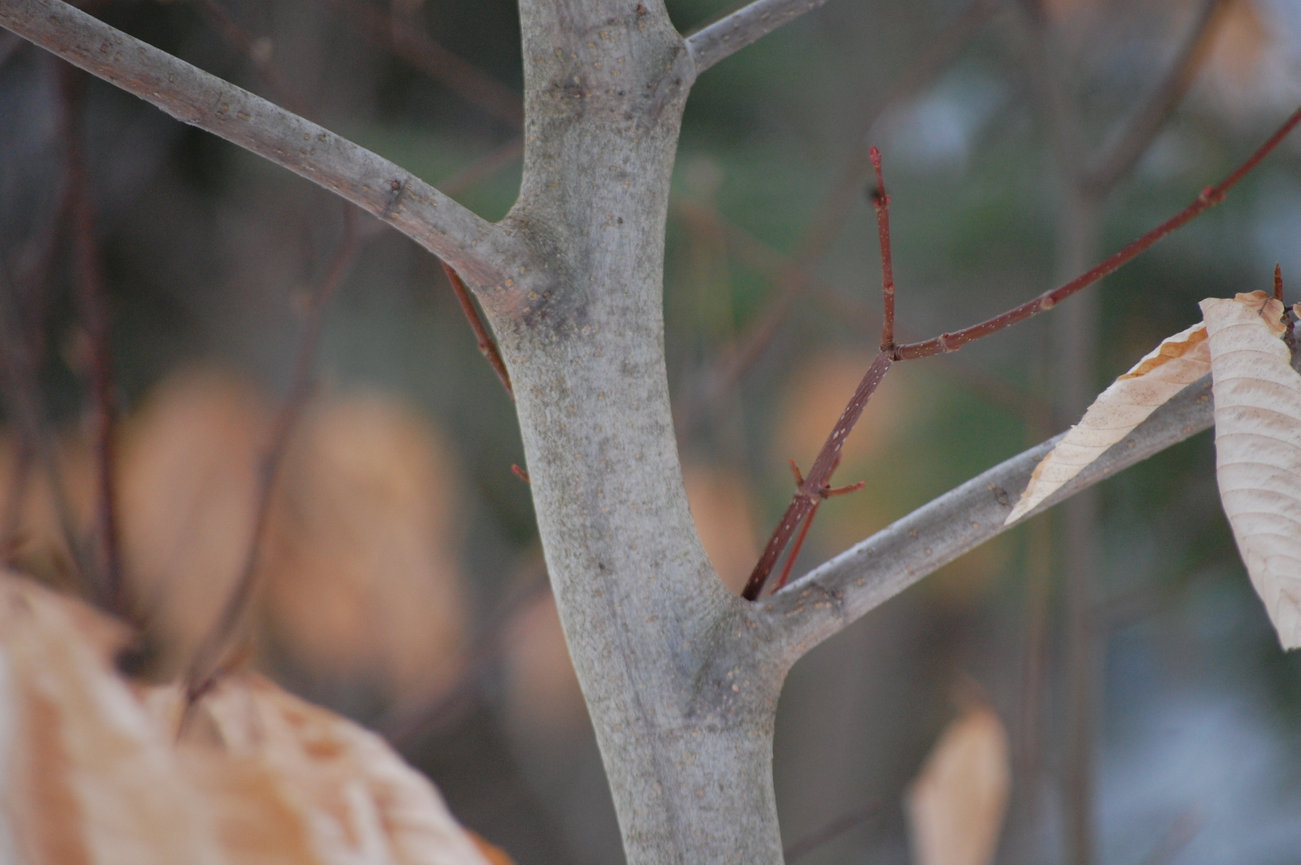
Twig: Thin, zigzag form, light brown.
Flowers: Monoecious (pollen and seed flowers on the same tree).
Fruits: Edible nuts, reddish brown shell that splits into 4 parts.
3 sided, 18 ⇔ 22 centimeters.
Ripen and shed in autumn.
Dispersed by birds and mammals.
Can take 50 years for the first good seed crops, resuming production every 2-8 years.
Seeds & Seedlings: Germinate very early in the first spring.
Viable for one winter if stored moist and cool.
Cotyledons: fleshy, broad, notched, green above, white below, raised 3-6 cm above the surface.
First 2 true leaves opposite, 3-6 cm above cotyledons, with a terminal bud forming immediately above them.
Vegetative Reproduction: Root/stump sprouts.
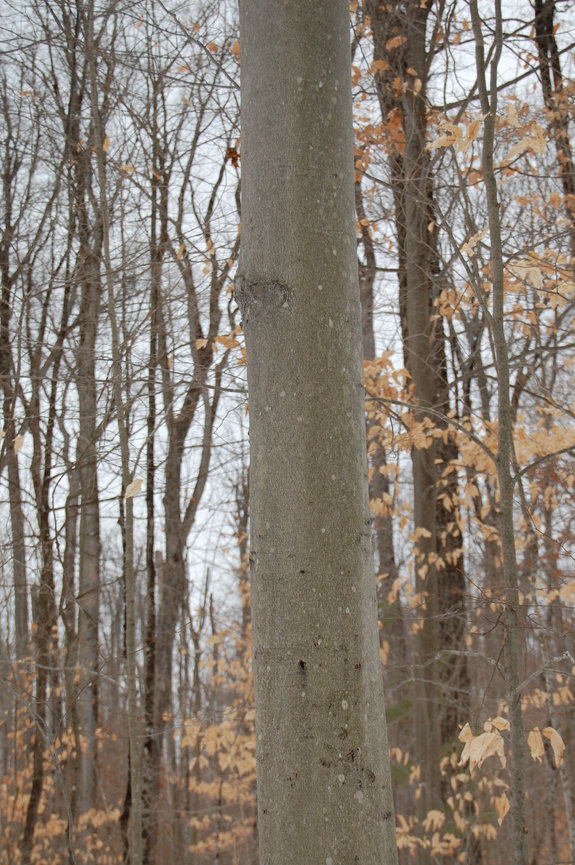
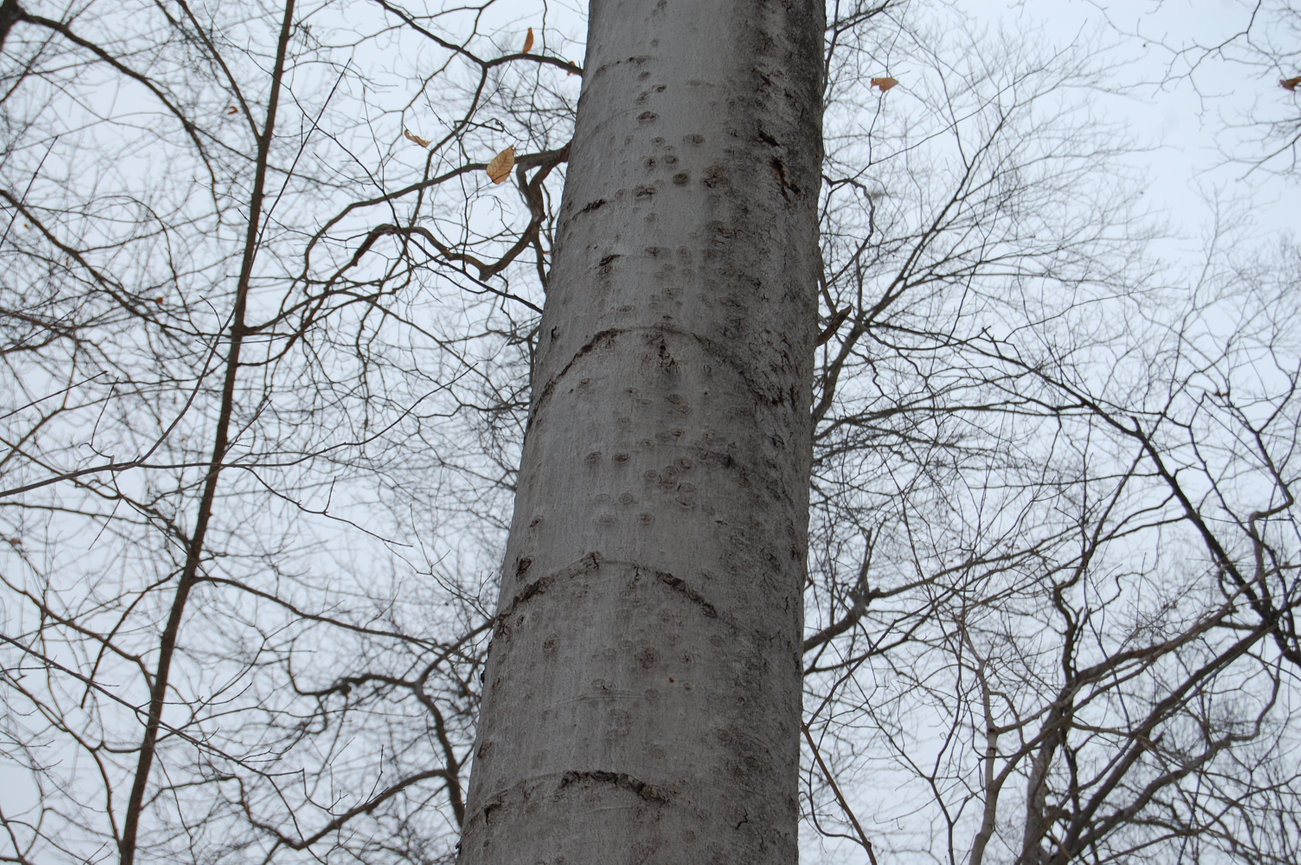
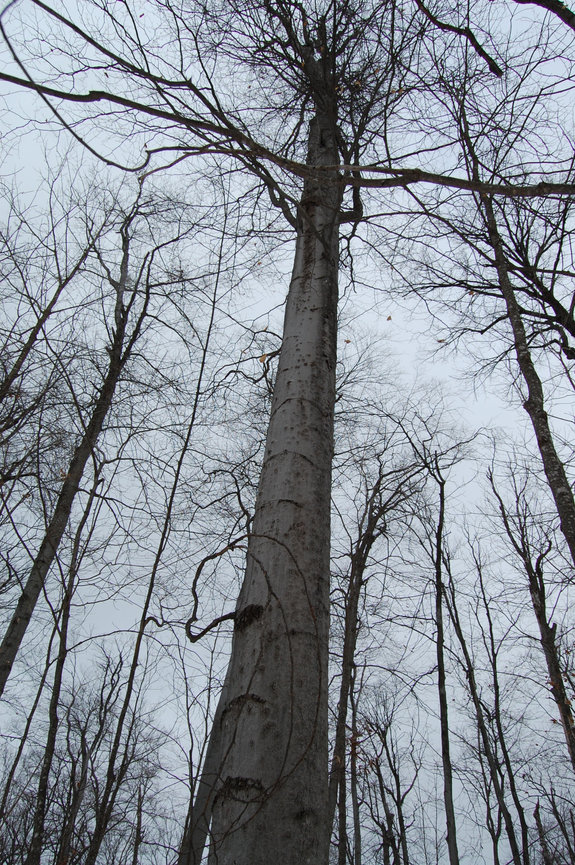
Rhytidome: Thin, very smooth, light gray with bluish tone, mottled.
Remains smooth on mature trees.
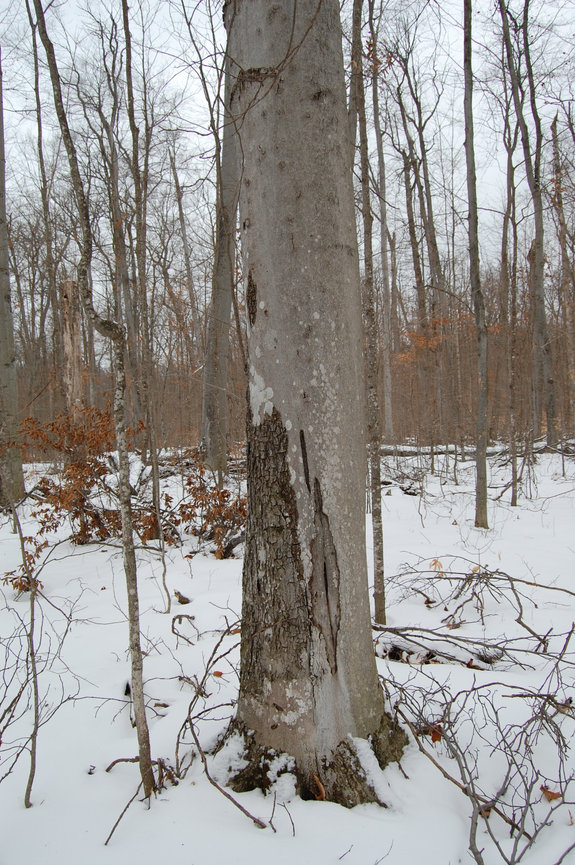
Beech scale insect (Cryptococcus fagisuga) and Nectria coccinea fungus cause cankers that may kill the tree. You can distinguish this with the reddish patches.
While fun to touch because the texture is inviting, not recommended in an effort to prevent spread of the destructive disease.
Wood: Heavy, hard, tough, strong, but not durable.
Light brown to reddish-brown.
Diffuse-porous, with obvious growth layers.
Large, conspicuous rays.
Used for flooring, furniture, containers, handles, and woodenware.
Note:
Nuts attract many birds and mammals (from bear to people).
One of the most shade tolerant tree species.
Pleasant to touch but prone to Beech Bark Disease... spread partly by human contact.
Beech Scale Disease